





Canthal Tilt Test: Check Your Eye Angle
Learn what positive, neutral and negative canthal tilt mean, check your own eye angle at home, or ask YouCam's AI Agent for a quick estimate from your photo.
What Is Canthal Tilt? Positive, Neutral and Negative
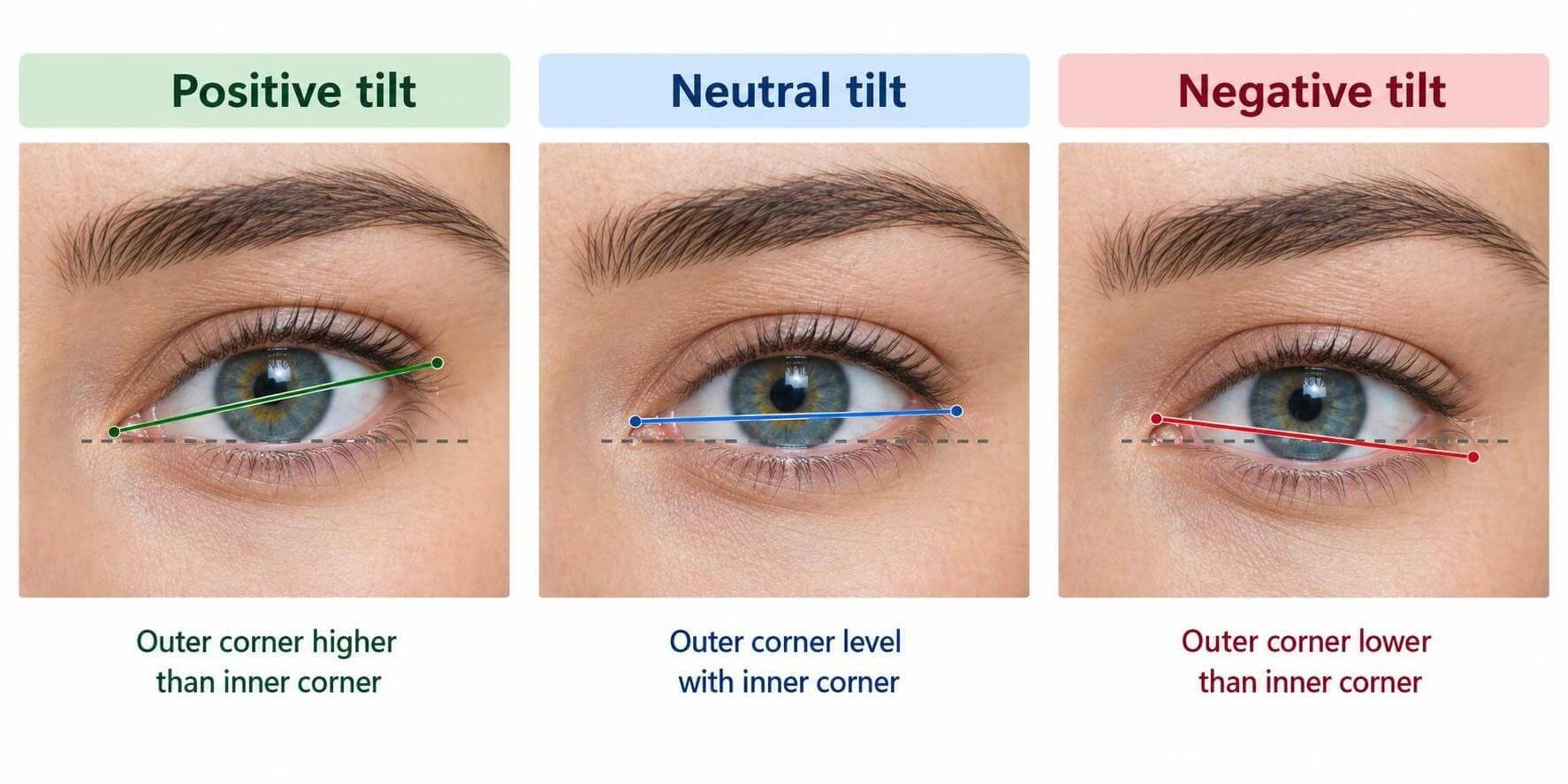
Canthal tilt is the angle of an imaginary line that runs from the inner corner of your eye (near the nose) to the outer corner (near the temple), compared with a level horizontal line.
- Positive tilt: the outer corner sits higher than the inner corner, giving an upturned look.
- Neutral tilt: both corners are about level.
- Negative tilt: the outer corner sits lower than the inner corner, giving a downturned look.
It is just a way to describe eye shape. There is no "right" angle, and every type is common.
How to Check Your Canthal Tilt at Home
You only need a clear photo and a straight line.
- Take a straight-on photo at eye level with your face relaxed and your hair away from your eyes.
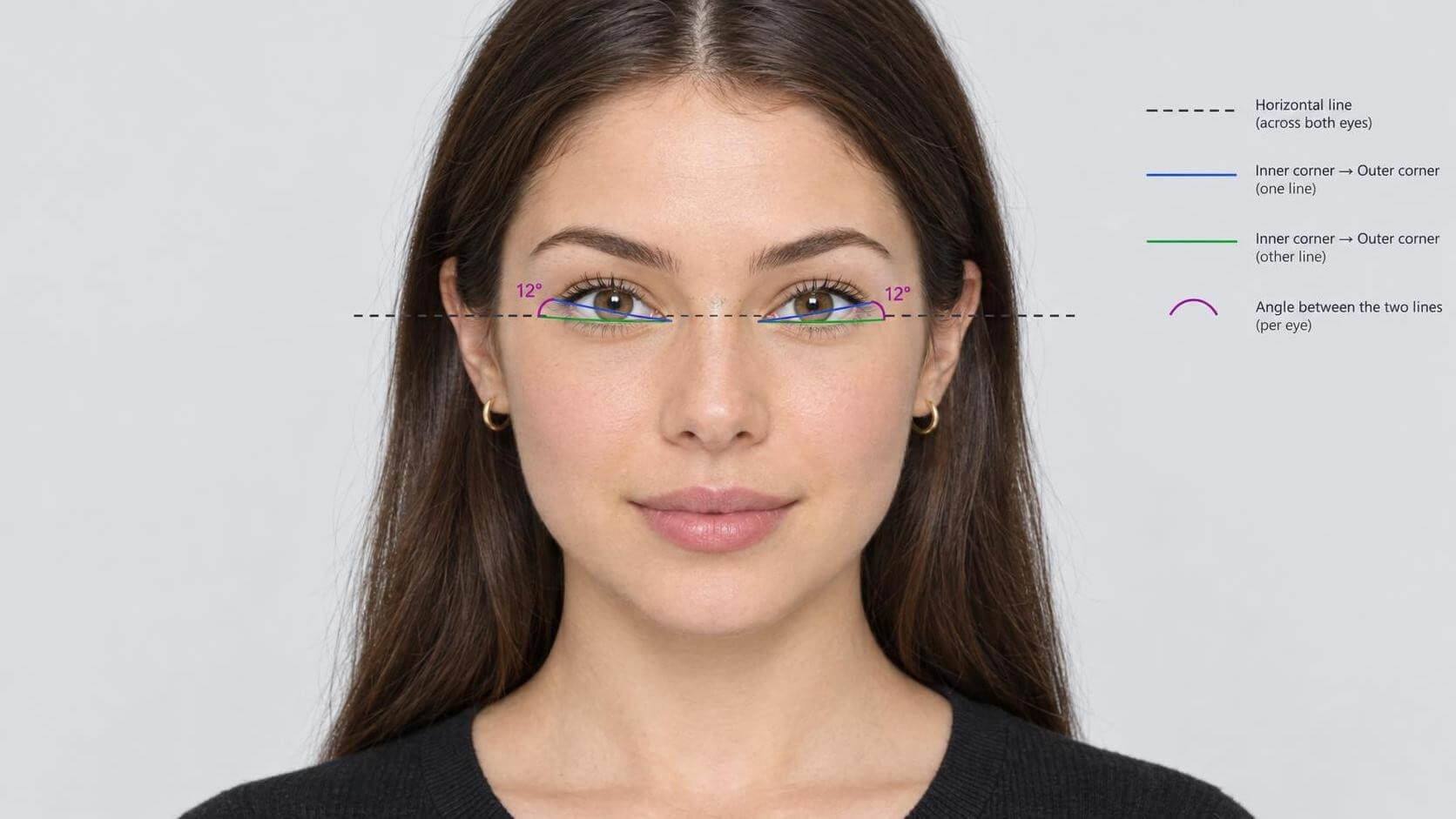
- Draw a level horizontal line through the inner corners of both eyes.
- Draw a line from the inner corner to the outer corner of one eye.
- See whether the outer corner sits above, on, or below the level line.
Try it faster: upload a front-facing photo to the AI Agent and ask, "What is my canthal tilt?" You get a quick visual estimate, not a lab measurement. Head tilt, camera angle and expression change the result, so use the same level photo each time.
Canthal Tilt and Your Look: Makeup, Brows and Glasses
Once you know your eye angle, you can style around it.
- Positive tilt: a soft winged liner follows the natural upward line. Keep brows gently arched.
- Neutral tilt: most liner and frame shapes work, so choose by face shape.
- Negative tilt: lift the outer corner with a small upward flick, keep shadow lighter at the outer edge and choose frames that are slightly higher at the outer corners.
Note: This is for styling guidance only. It is not a medical or cosmetic assessment. See an eye care professional about any eye health question.

Canthal Tilt Test at a Glance
| Type | What you see | Styling idea |
|---|---|---|
| Positive tilt | Outer corner higher than the inner corner | Soft winged liner that follows the natural lift |
| Neutral tilt | Both corners about level | Most liner and frame shapes work |
| Negative tilt | Outer corner lower than the inner corner | Small upward flick and frames that lift at the outer corners |
Canthal Tilt FAQs
What is canthal tilt?
Canthal tilt is the angle of the line from the inner corner of the eye to the outer corner, compared with a level horizontal line. It is described as positive, neutral or negative.
What is a positive canthal tilt?
A positive canthal tilt means the outer corner of the eye sits higher than the inner corner, which gives the eye an upturned look.
What is a negative canthal tilt?
A negative canthal tilt means the outer corner sits lower than the inner corner, which gives the eye a downturned look. It is a normal variation in eye shape.
How do I find my canthal tilt?
Take a straight-on photo at eye level, draw a level line through the inner corners of the eyes, then see whether the outer corner of each eye sits above, on or below it. You can also ask the AI Agent for a quick estimate from your photo.
Is there an ideal canthal tilt?
No. Positive, neutral and negative tilts are all common. Use it to describe your eye shape and choose makeup or glasses that suit you, not as a score.
Why does my canthal tilt look different in different photos?
Head tilt, camera angle, lens and expression all change how the eye line looks. Use the same level, front-facing photo each time to compare.
Can AI measure my canthal tilt exactly?
The AI Agent gives a visual estimate from your photo, not a clinical measurement. For any medical or cosmetic question, speak with an eye care professional.

