

Golden Ratio Face Calculator: Check Your Facial Proportions
Learn how the golden ratio, facial thirds and facial fifths describe face proportions, measure your own at home, or ask YouCam's AI Agent for a quick estimate from your photo.
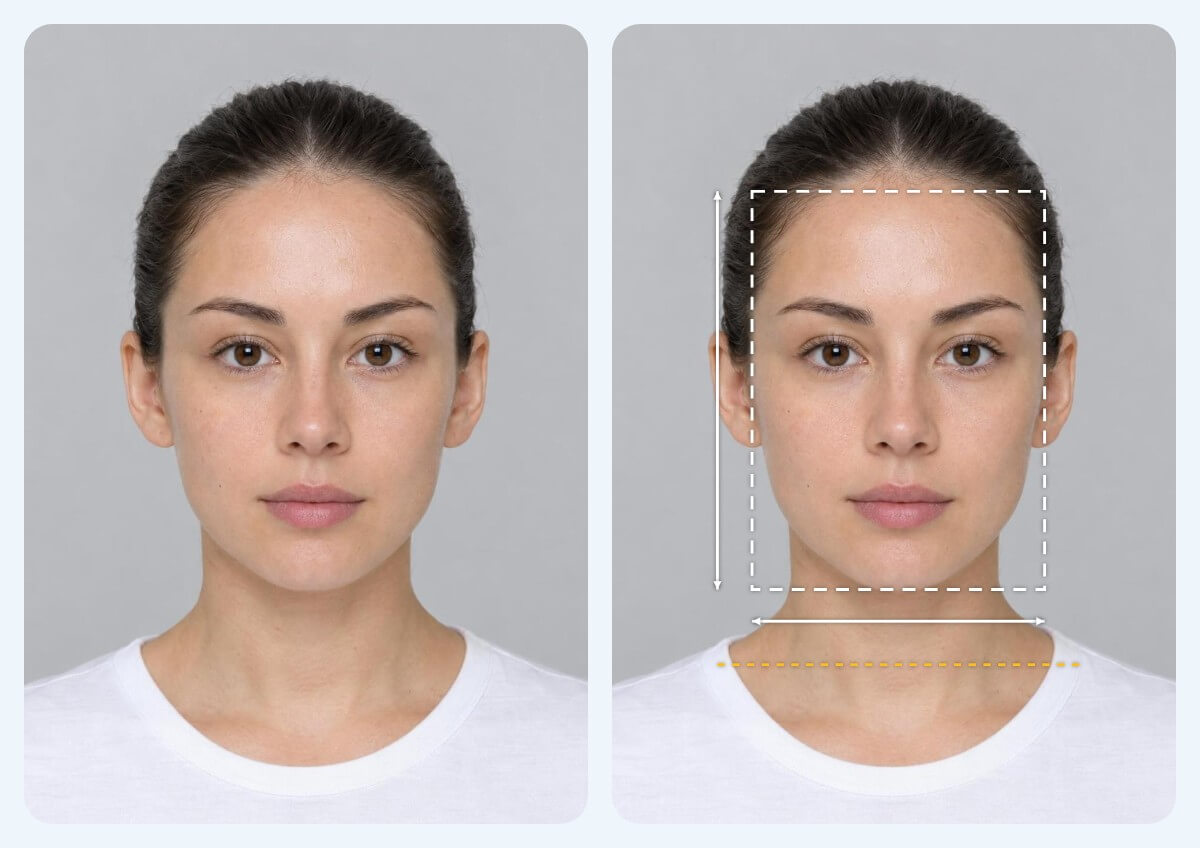
Golden Ratio Face: Length Divided by Width
The golden ratio is about 1.618. Applied to a face, it compares face length (hairline to chin) with face width (across the cheekbones). A face near 1.6 is often called "harmonious".
Try it: upload a front-facing photo to the AI Agent and ask, "Check my facial thirds, fifths and length-to-width ratio." You get a quick visual estimate, not a lab measurement.
Treat it as a fun reference point, not a score. Real faces commonly fall between about 1.3 and 1.8.
- Take a straight-on photo with your hair pulled back.
- Measure hairline to chin.
- Measure the widest point across the cheekbones.
- Divide length by width.
Facial Thirds: Check Your Vertical Balance
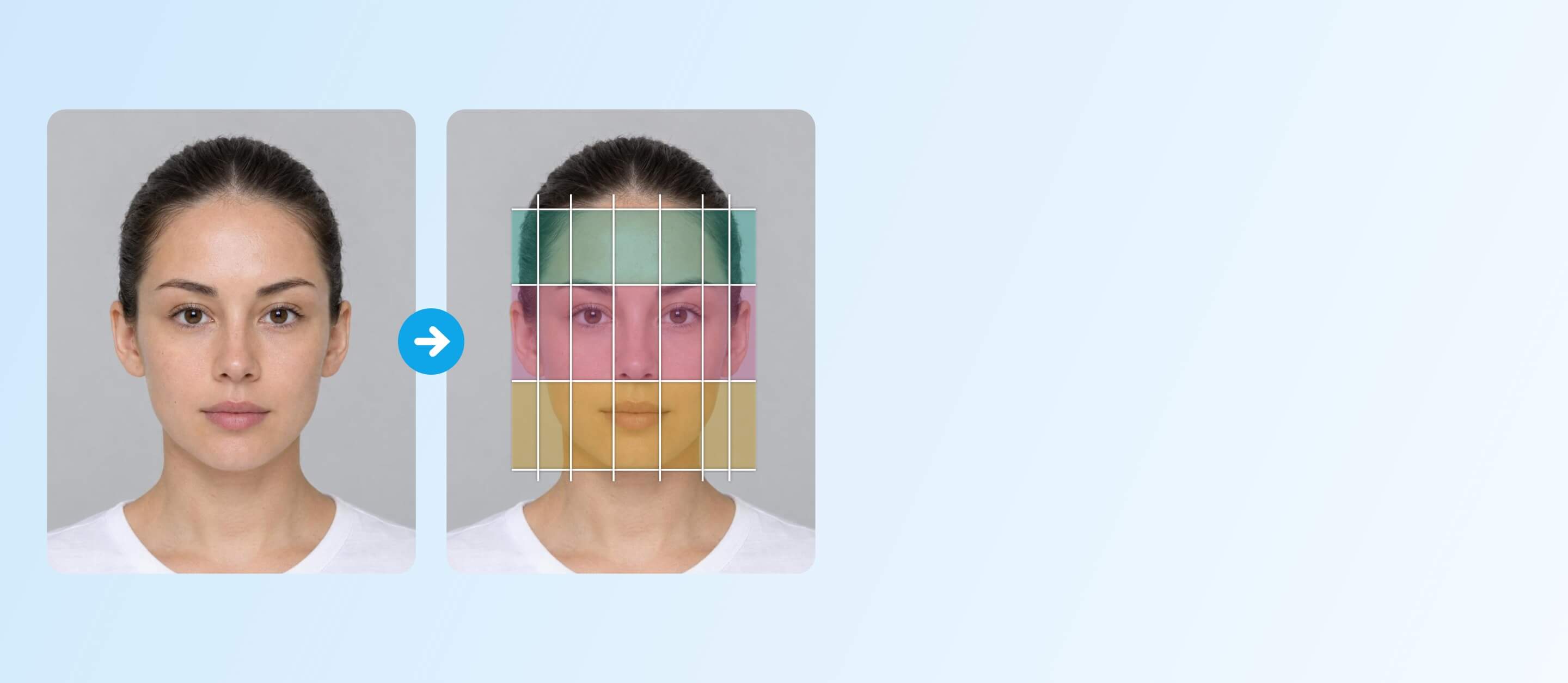
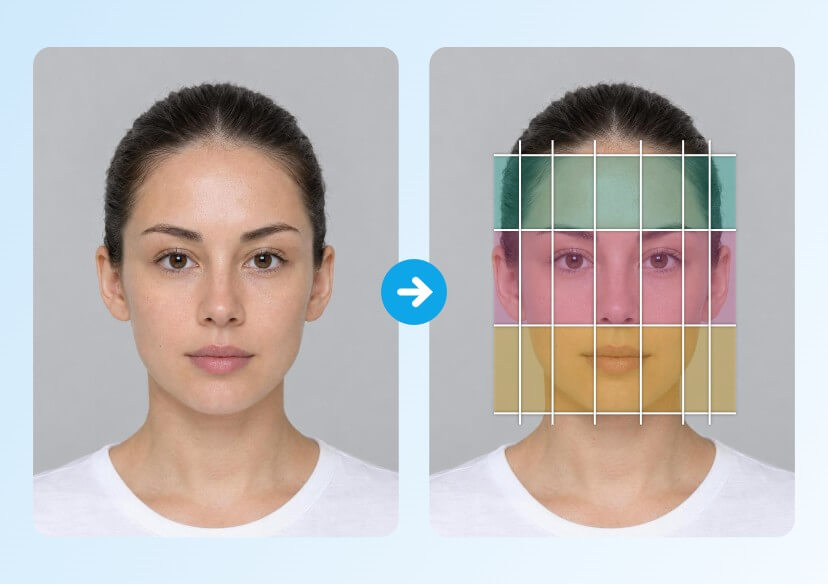
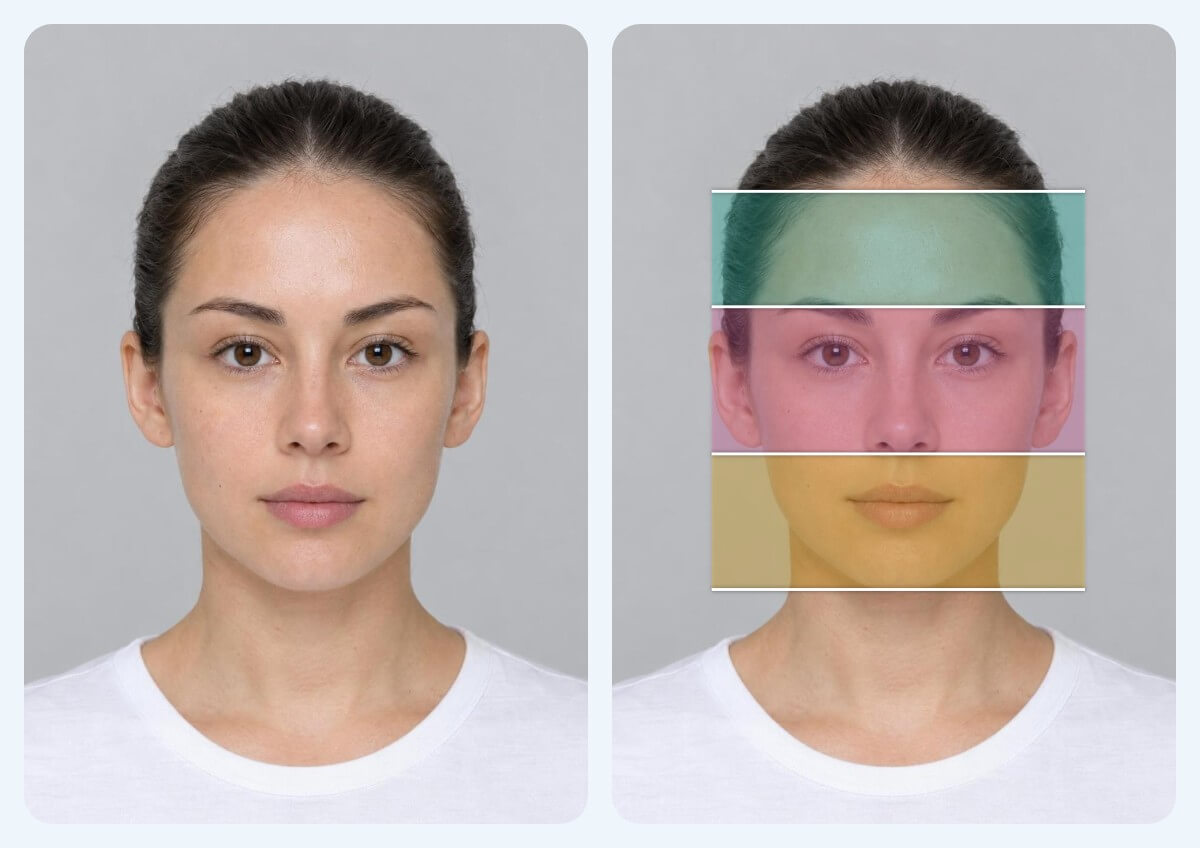
Facial thirds split the face from top to bottom into three zones that are close to equal in a balanced face.
- Upper third: hairline to the top of the eyebrows.
- Middle third: eyebrows to the bottom of the nose.
- Lower third: bottom of the nose to the chin.
How to check: draw a line at each of the four points and compare the three gaps. A longer upper third reads as a high forehead, a longer middle third as a longer nose area, and a longer lower third as a longer chin.
Use it: bangs shorten a long upper third, and volume at the crown balances a long lower third.
Facial Fifths: Check Your Horizontal Balance
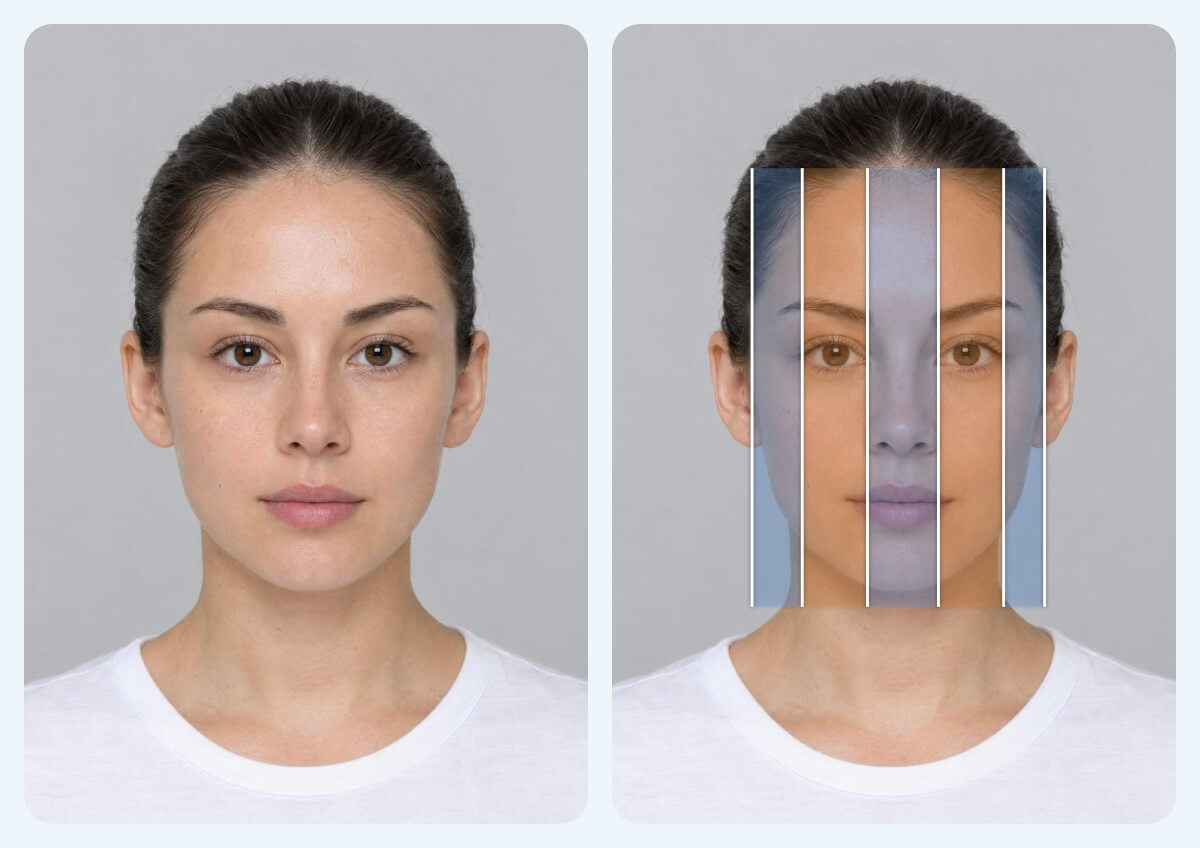
Facial fifths divide the face width into five columns, each about the width of one eye.
- Outer face to the outer corner of the eye.
- The first eye.
- The gap between the eyes.
- The second eye.
- Outer corner of the eye to the outer face.
How to check: measure one eye, then see how many eye widths fit in the gap and in each outer section. Close-set eyes make the center column narrower; wide-set eyes make it wider.
Use it: eyeliner placement and glasses frames can balance wider or narrower sections.
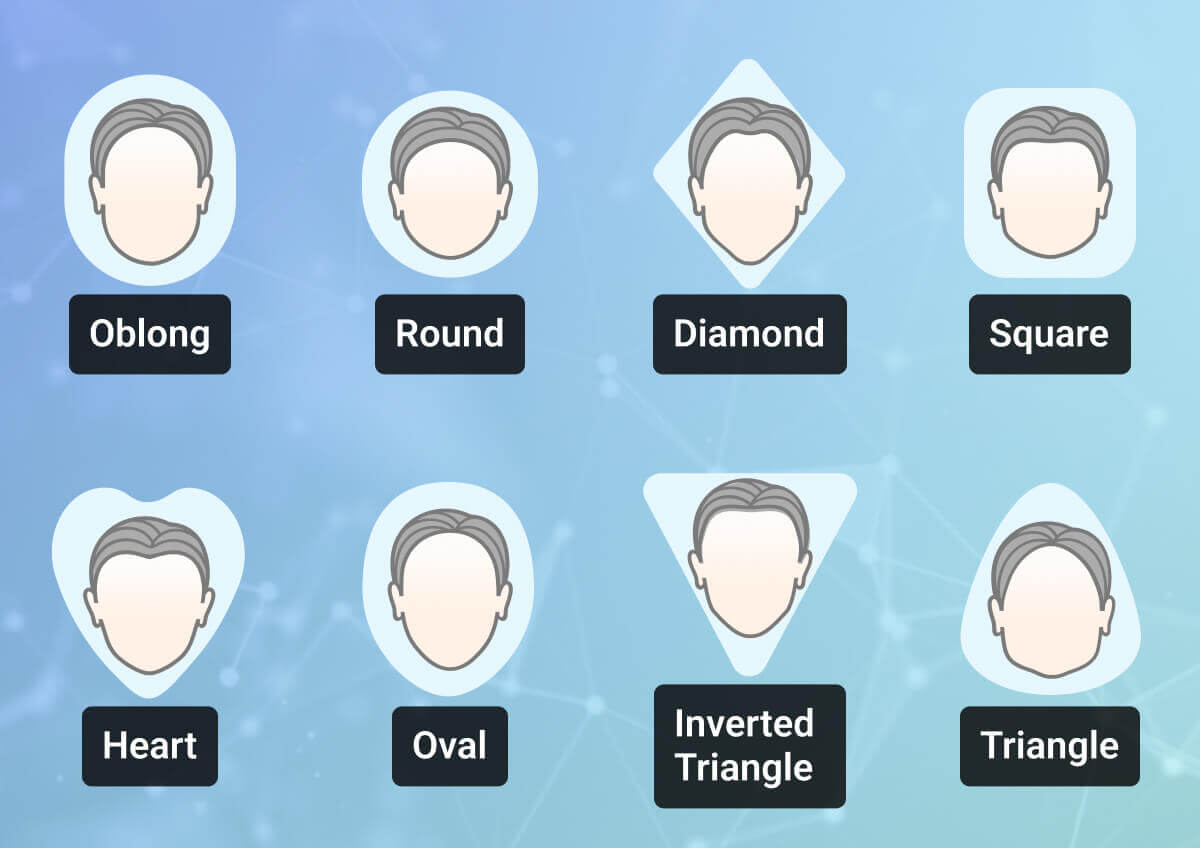
Find Your Face Shape With AI
Ratios describe proportions. Your face shape tells you which cuts, frames and styles suit you. YouCam's AI Face Shape Detector analyzes a photo of your face and matches it to a face shape, so you can skip the ruler.
For a more personal read, ask the AI Agent about your photo, for example which hairstyle suits you.
Note: Results are for fun and styling guidance only, not a medical or cosmetic assessment.
Golden Ratio Face Calculator at a Glance
| Measurement | How to take it | Common reference value |
|---|---|---|
| Face length to width | Hairline to chin, divided by the widest point across the cheekbones | About 1.618 |
| Facial thirds | Compare hairline to brow, brow to nose base, and nose base to chin | Three roughly equal parts |
| Facial fifths | Compare the face width to the width of one eye | Five roughly equal eye-width sections |
Golden Ratio Face FAQs
What is the golden ratio for a face?
It is a proportion of about 1.618, most often applied as face length to face width. It is a popular guideline for describing balanced proportions, not a scientific measure of beauty.
How do I calculate my golden ratio face?
Take a straight-on photo, measure the face from hairline to chin and across the cheekbones, then divide length by width. A result near 1.6 is close to the golden ratio.
What are facial thirds?
Facial thirds split the face into three vertical zones: hairline to eyebrows, eyebrows to nose base, and nose base to chin. In balanced proportions the three are close to equal.
What are facial fifths?
Facial fifths split the face width into five columns about the size of one eye each: outer face to eye, eye, space between the eyes, eye, and eye to outer face.
Do I need a 1.618 face ratio to be attractive?
No. Attractiveness depends on many things, and most real faces are not exactly 1.618. Use the ratio as a reference for styling, not as a score.
Can AI tell me my face shape from a photo?
Yes. Upload a clear, front-facing photo to YouCam's AI Face Shape Detector and it matches your face to a face shape.
Why do my measurements change between photos?
Camera distance, head tilt, lens and hairstyle all change how the face looks. Use the same level, front-facing photo each time for comparable numbers.

